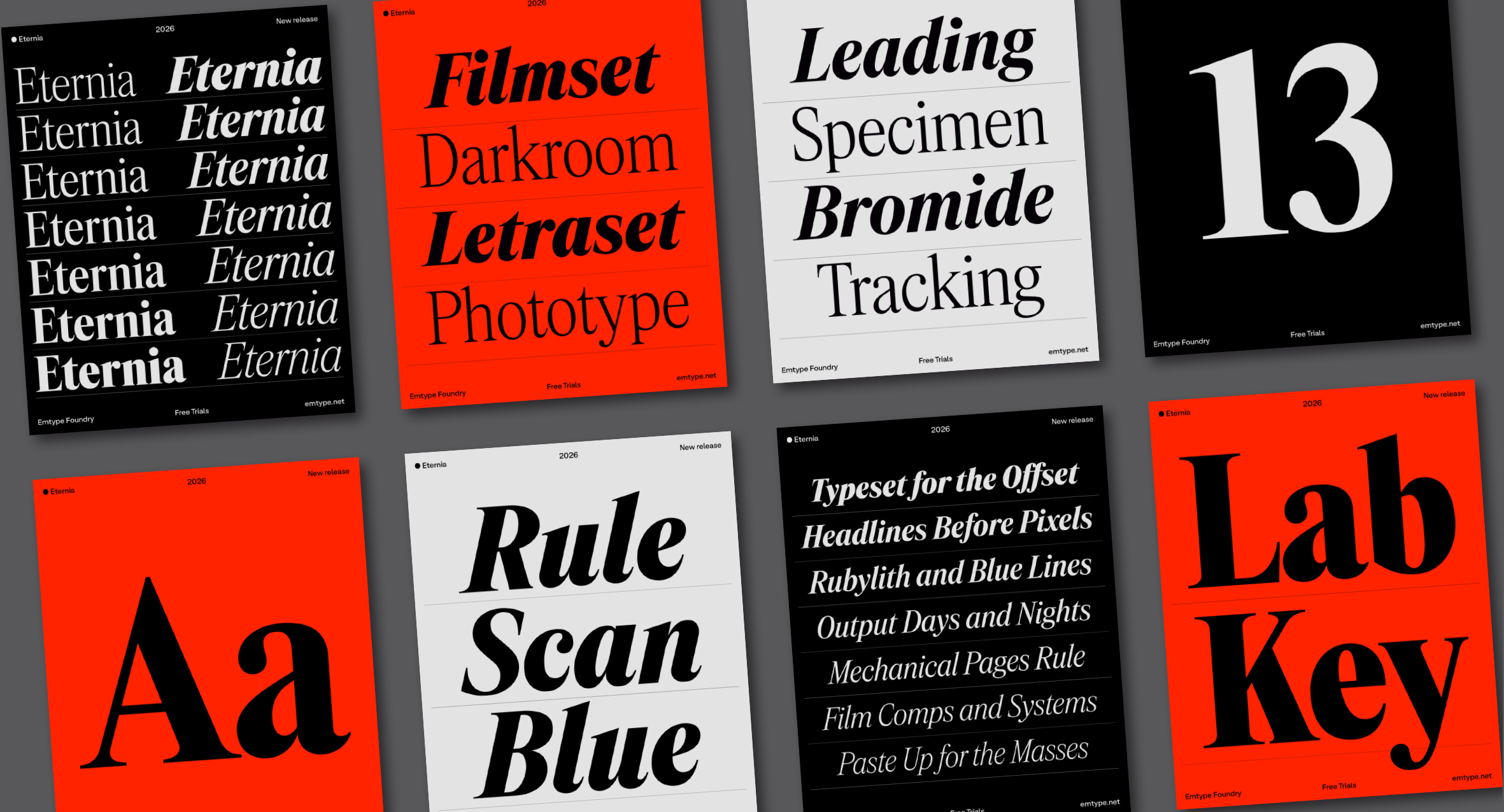
Eternia is inspired by the visual world of technology magazines, newspaper supplements, and advertising typography from the 1970s and 1980s. Its tall proportions and semi-condensed width give it a compact, vertical presence, while its controlled contrast and slightly tight spacing recreate the density and texture of headlines from that period. The result feels familiar without becoming nostalgic, a typeface that could have existed decades ago and still feel relevant today.

Eternia is inspired by the visual world of technology magazines, newspaper supplements, and advertising typography from the 1970s and 1980s. Its tall proportions and semi-condensed width give it a compact, vertical presence, while its controlled contrast and slightly tight spacing recreate the density and texture of headlines from that period. The result feels familiar without becoming nostalgic, a typeface that could have existed decades ago and still feel relevant today. 


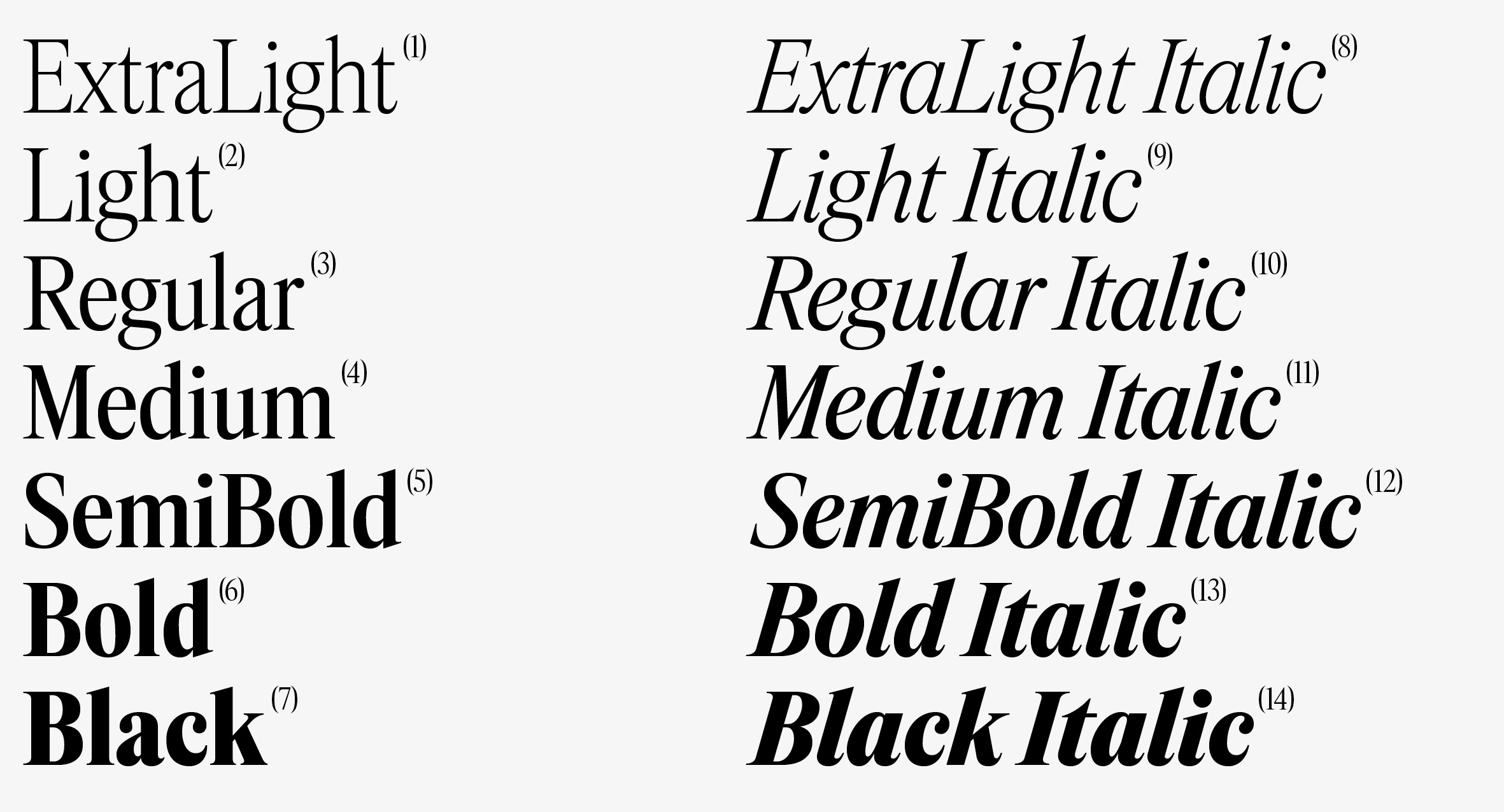
The family has 14 styles, 7 weights plus matching italics.


Eternia began in 2024 as a personal project, a way to return to a kind of design I had not worked on for some time. In recent years, almost everything I had designed was sans serif, either for clients or for my catalogue. Serif typefaces had moved into the background, except for the occasional custom project. Starting Eternia was a way to reconnect with that interest.


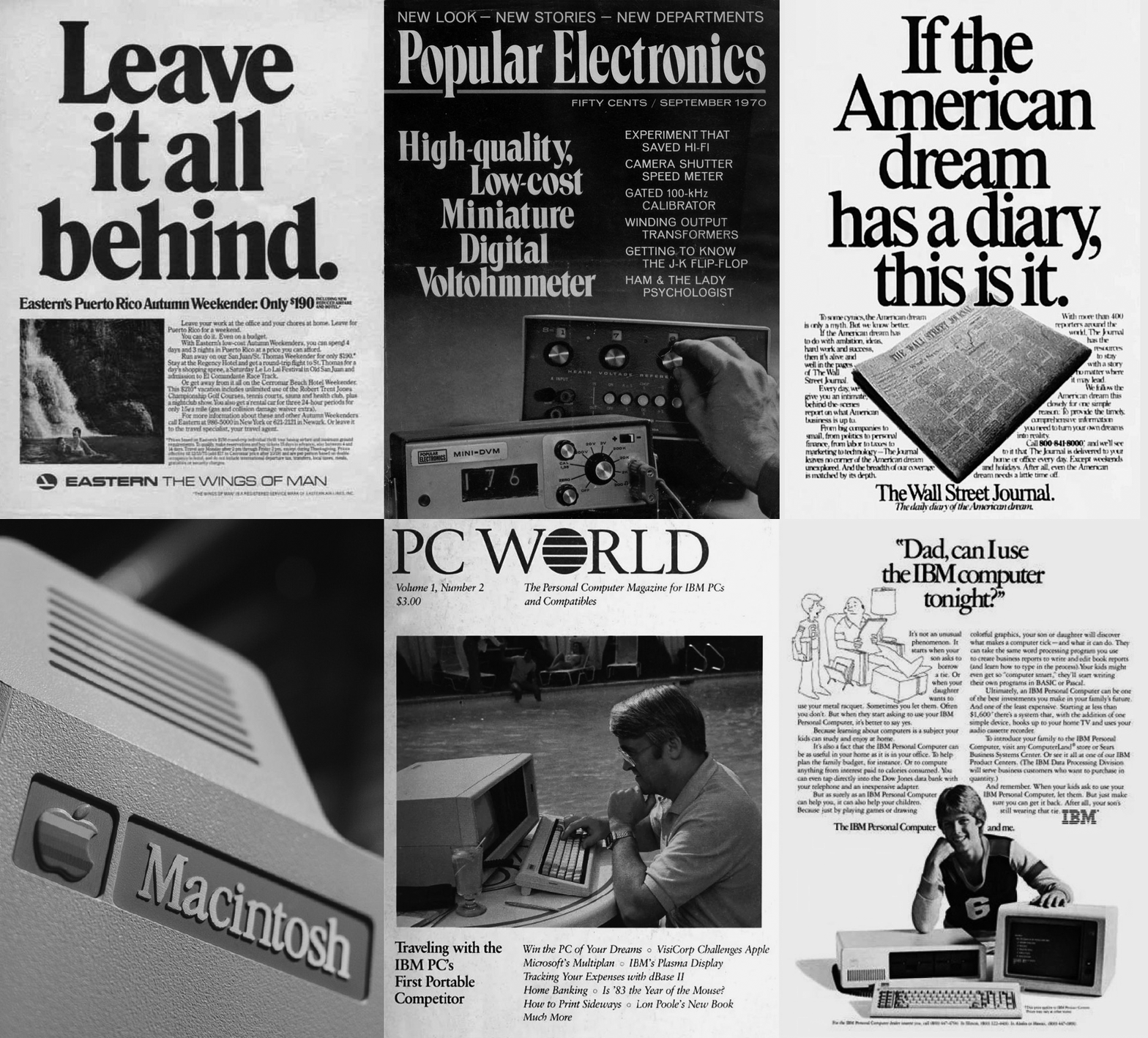
A selection of early technology publications, advertisements, and printed materials from the 1970s and 1980s, documenting the rise of personal computing and including examples that inspired the project.


Its references come from the visual world of technology magazines, newspaper supplements, and advertising typography from the 1970s and 1980s. In its overall feel, it has a slight connection to Times, but its terminals are closer to Plantin, especially in letters like C, S, and s. Its proportions are also closer to Apple Garamond, tall, semi-condensed, and with a clear vertical presence. Times, Plantin, Garamond, Century Schoolbook, and others are not direct models, but part of a wider editorial serif tradition that informed the design. You can sense that period in the typeface, but without nostalgia, seen instead through a contemporary lens.


It is a narrow space to inhabit, something that feels new yet looks as if it has always existed, but in type design the variations and ideas are endless. There is always room, however small, for new angles and unexplored ground.


The design changed significantly at an early stage. Eternia first began with fairly standard text proportions, which made it feel too close to many existing typefaces in the same genre. I decided to explore other directions, not only through different terminals and details, but also through taller proportions that pushed it more clearly toward display and headline use. That decision changed the meaning of the whole project. It is a narrow space to inhabit, something that feels new yet looks as if it has always existed, but in type design the possibilities are endless. There is always room, however small, for new ideas and new directions.


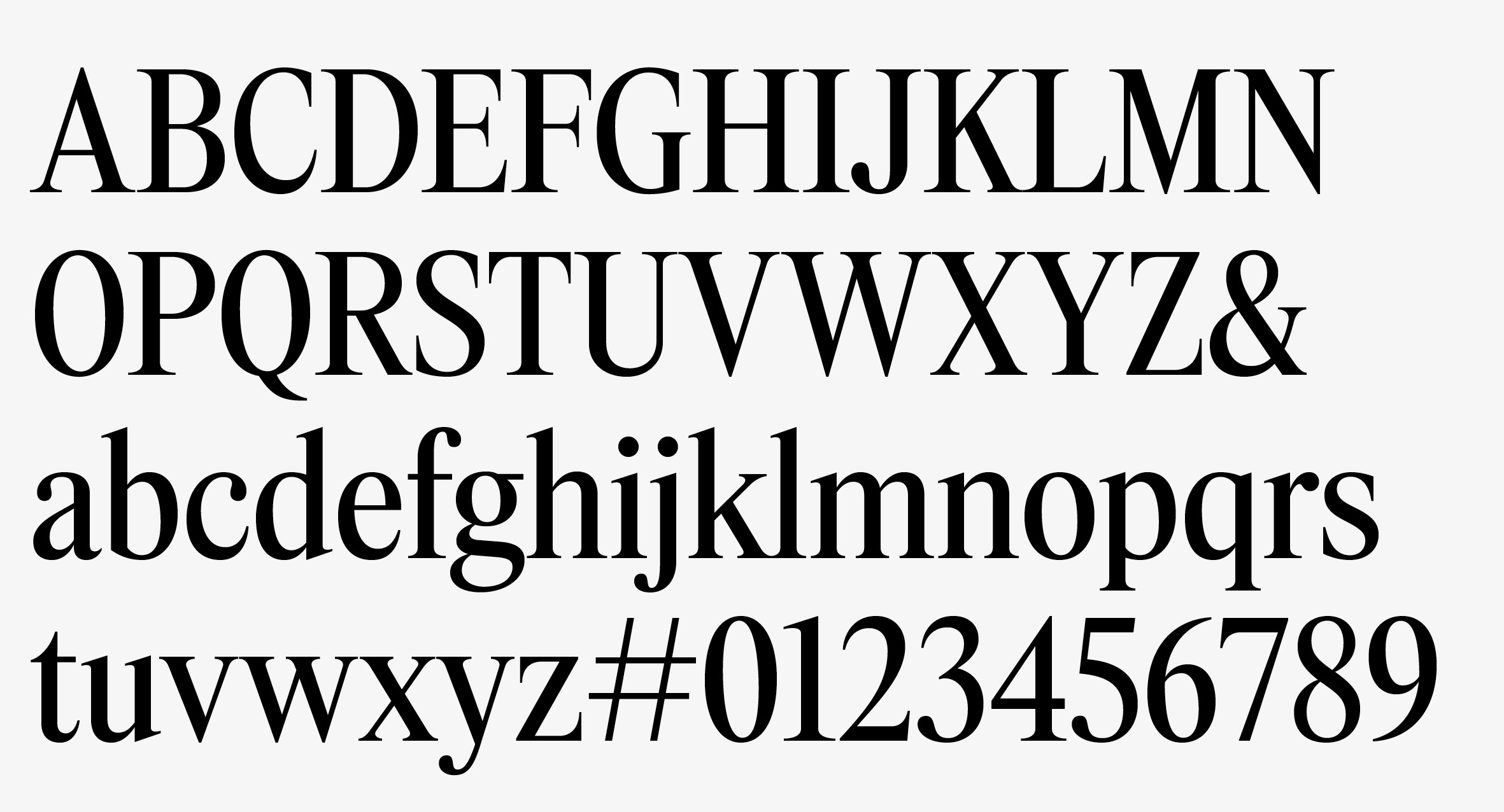
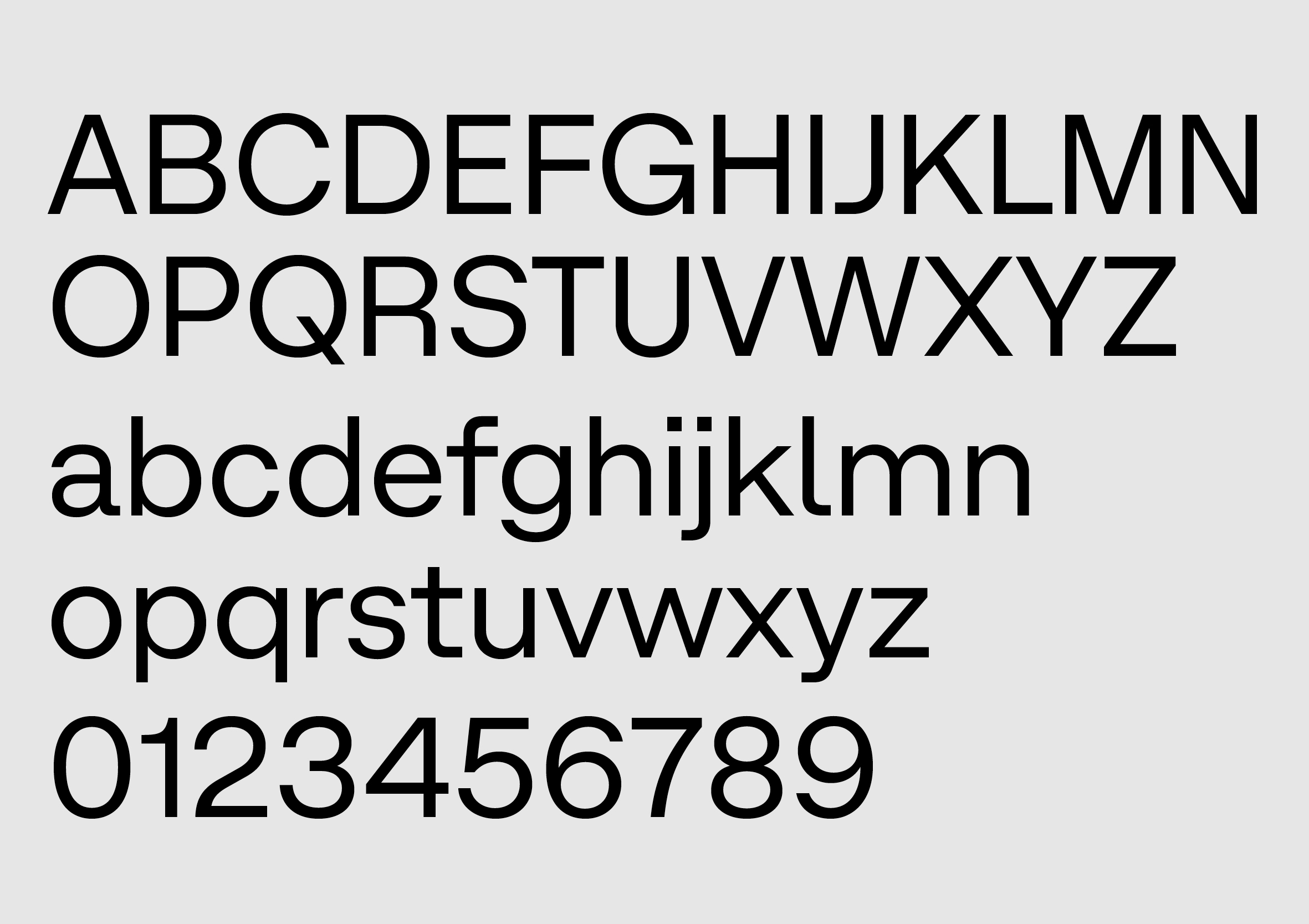
Eternia basic character set.


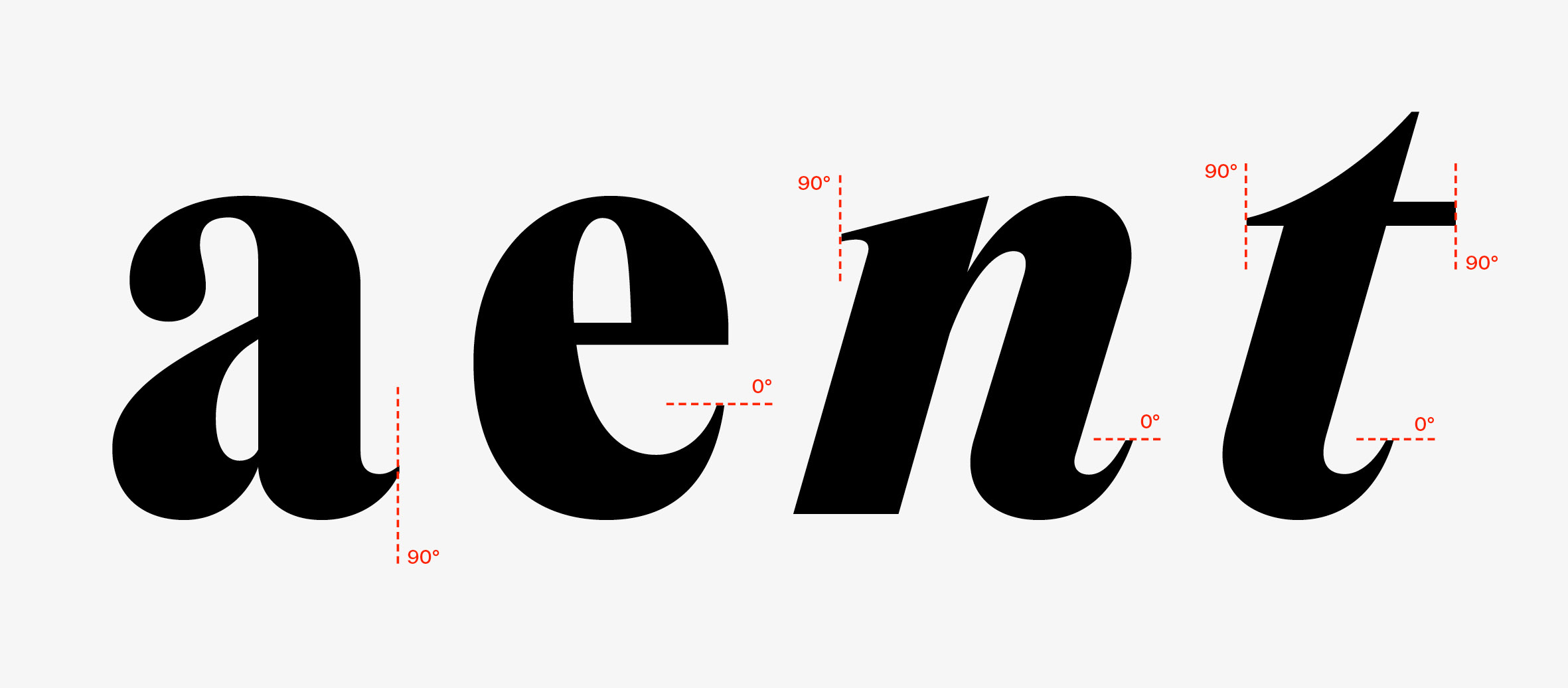
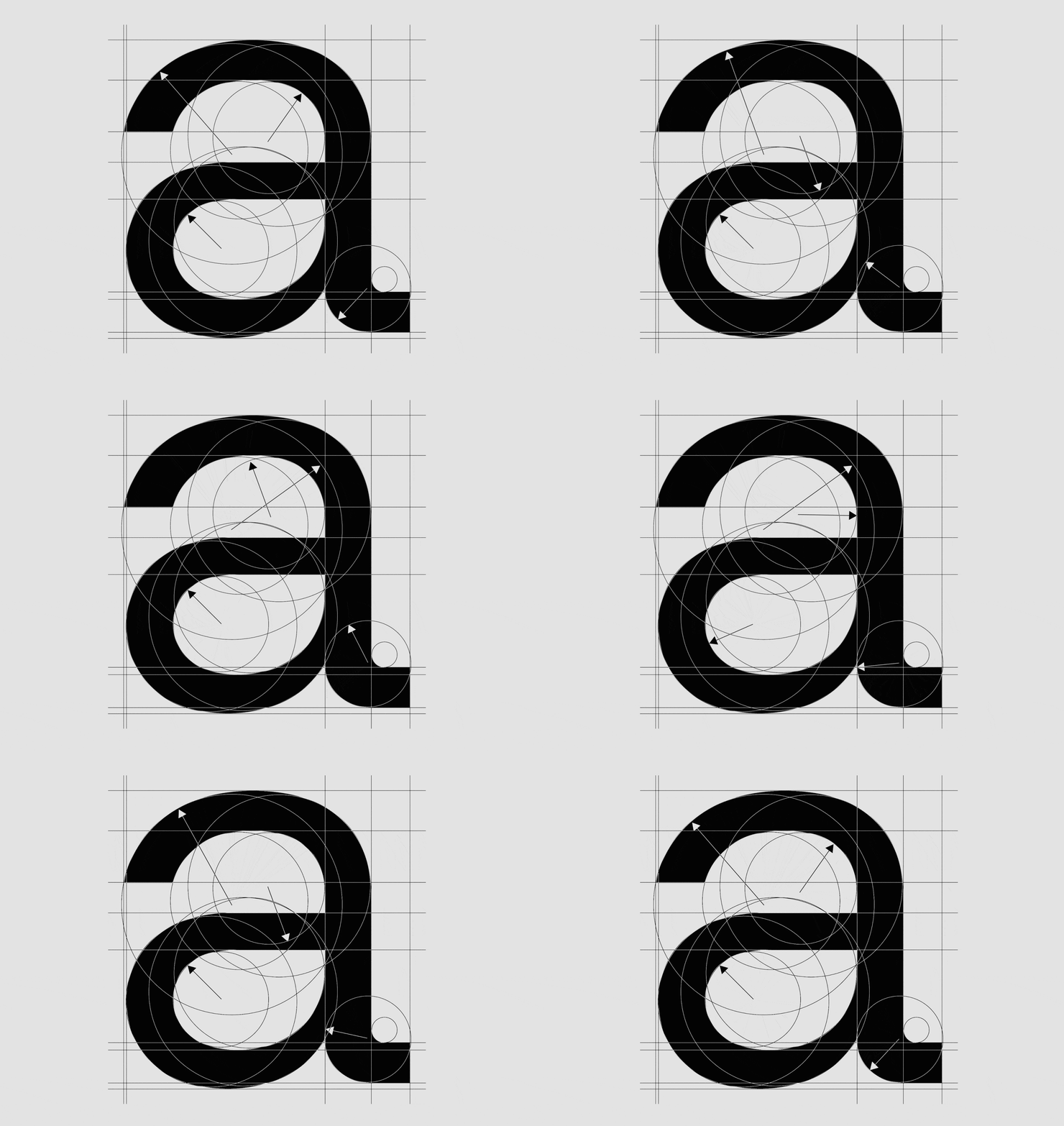
The contrast is noticeable, but not extreme. The goal was to achieve a crisp appearance without losing stability at smaller display sizes or in lighter weights on screen. The spacing is slightly tight, deliberately so, helping to recreate the density and compactness of headlines from 1970s and 1980s magazines. All stroke endings and terminals are cut at 90 degrees, a defining detail that gives the design a more rational, precise, and contemporary tone. The result is not heavy or oppressive, but compact enough to feel connected to that visual world.


The stroke endings and terminals are consistently cut along horizontal and vertical axes, reinforcing the design’s rational and contemporary tone.


Naming a typeface has become one of the most time-consuming parts of the process. For years I followed a personal rule: the name had to describe the typeface and contain enough distinct characters to work as a small specimen on its own. Today, almost every name is already taken, and that rule is becoming harder to follow. Now the main priority is simply that the name feels right for the design. Eternia tries to express the sense of permanence and broad relevance the typeface aims for, something that could have existed decades ago and could still feel right decades from now.


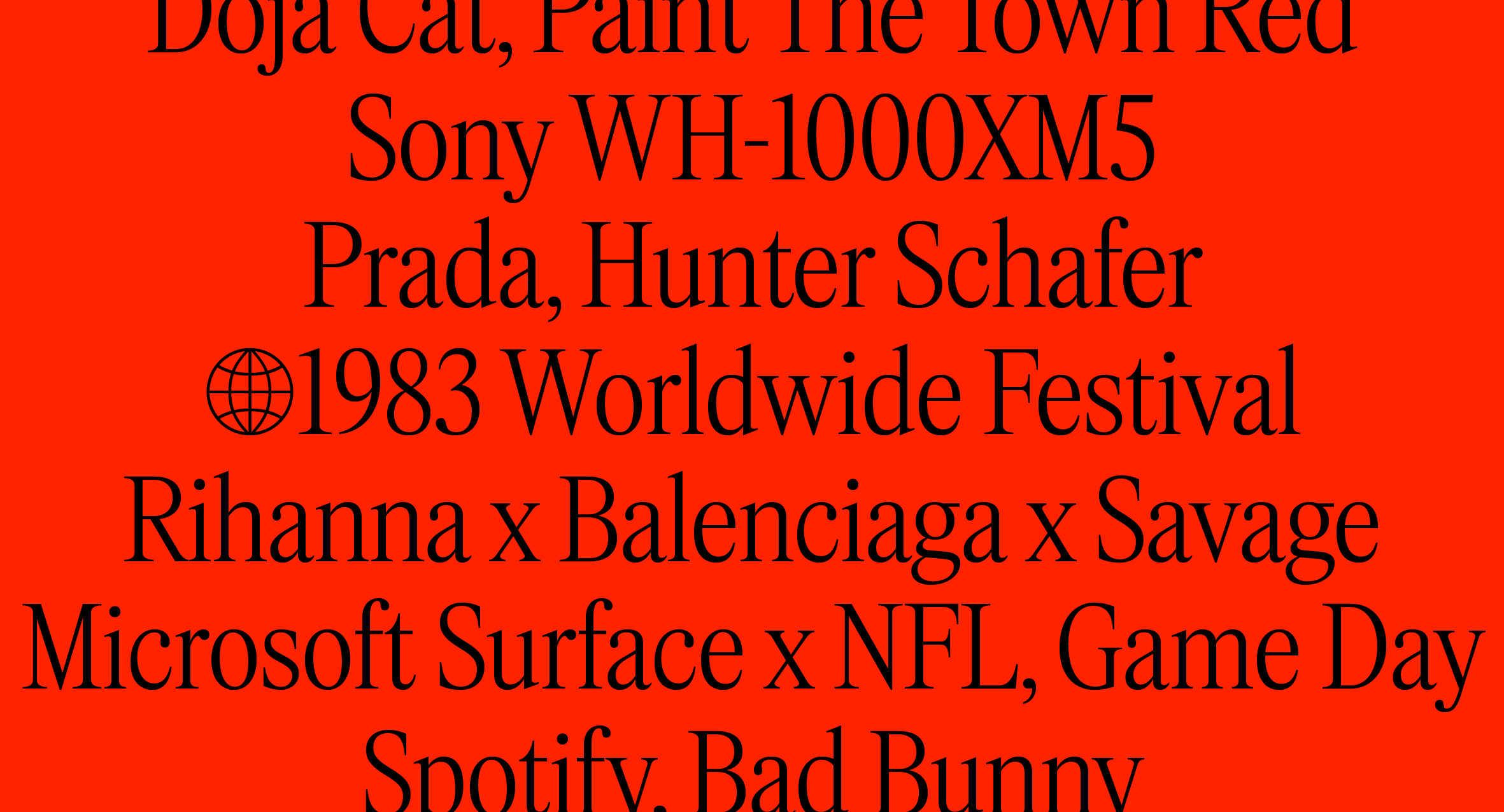
Designed for modern brands, editorial contexts, and digital environments.


The family includes 14 static styles, 7 weights with matching italics, as well as 2 variable fonts, Roman and Italic. The lightest and heaviest styles are mainly intended for display use, while the middle weights are more flexible across different applications. Together, they form a versatile system suited to modern brands, editorial contexts, and digital environments. 


View Eternia  /  Eternia PDF

Micrograph is a sans serif that navigates the line between classic and modern, ensuring its relevance and appeal will endure into the future. It has a subtle personality that sets it apart without compromising legibility. The spacing is tight, and its vertical proportions are compact with very short descenders. In the lighter weights, it features prominent punctuation that normalizes as the weight increases. With a clean and mechanical aesthetic, Micrograph offers great versatility across all media...

Micrograph is a sans serif that navigates the line between classic and modern, ensuring its relevance and appeal will endure into the future. It has a subtle personality that sets it apart without compromising legibility. The spacing is tight, and its vertical proportions are compact with very short descenders. In the lighter weights, it features prominent punctuation that normalizes as the weight increases. With a clean and mechanical aesthetic, Micrograph offers great versatility across all media.


Clean and mechanical aesthetic.


With an eye on classic typefaces, it aims to reinterpret that tradition through a contemporary and forward-looking perspective. The initial sketches date back to early 2022. The design went through several stages; initially, it had a stronger and more defined personality, but over time, it evolved into a more moderate and conservative character, which also made Micrograph more elegant, versatile, and timeless.


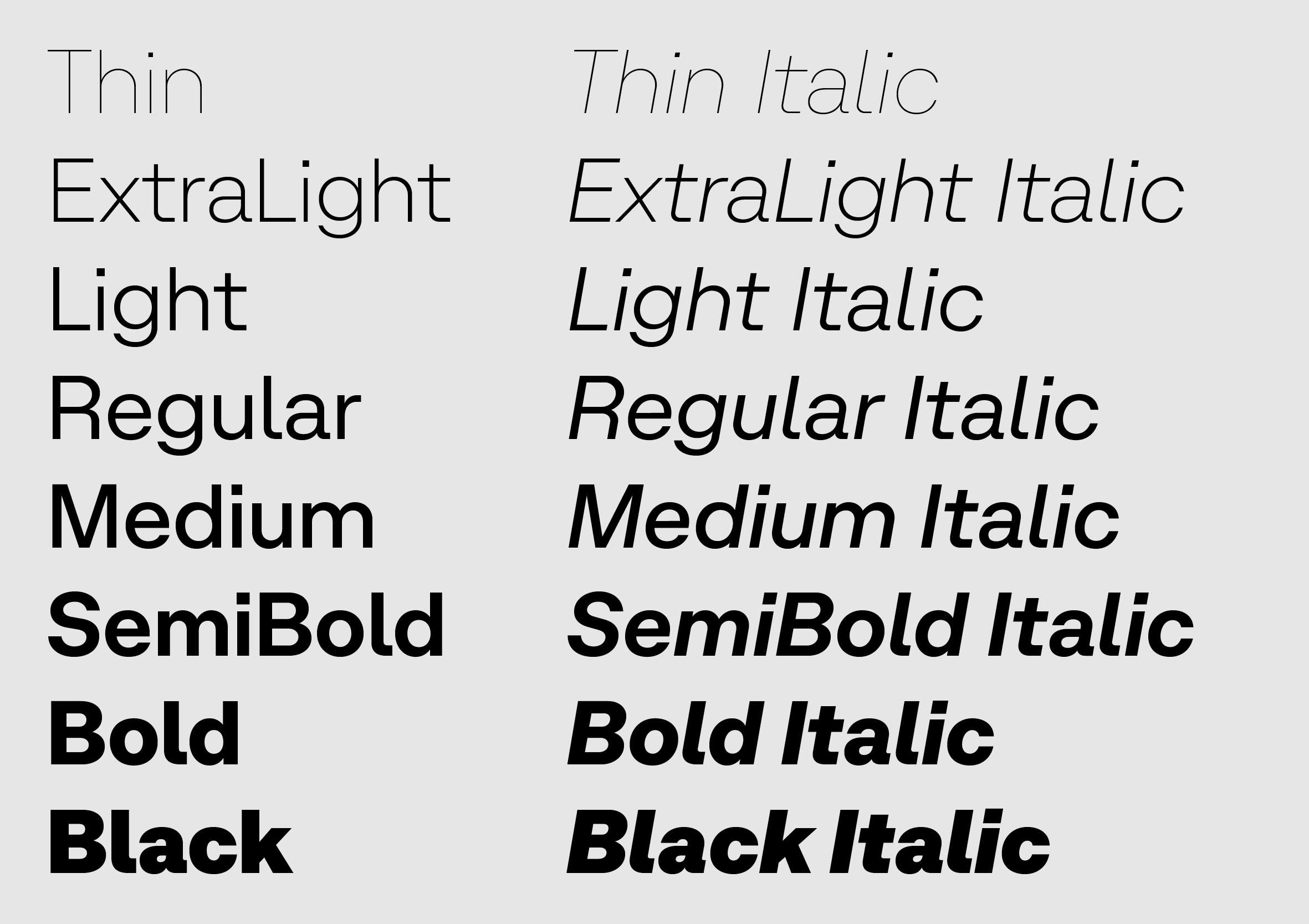
The family consists of 18 styles: 8 weights with matching italics and 2 variable fonts.


In this sense, the question is why choose a moderate personality over one full of character, with distinctive or trendy elements here and there. Trends are very tempting, but they also have an expiration date. Just as they start, they end, and what is trendy today will not be in the future. One of Micrograph’s purposes is to endure and be a useful tool for designers. On the other hand, trends with highly distinctive elements tend to have the opposite effect: they homogenize all typefaces, because those details are the first things that catch the eye. This is why Micrograph has a subtle yet identifiable personality.


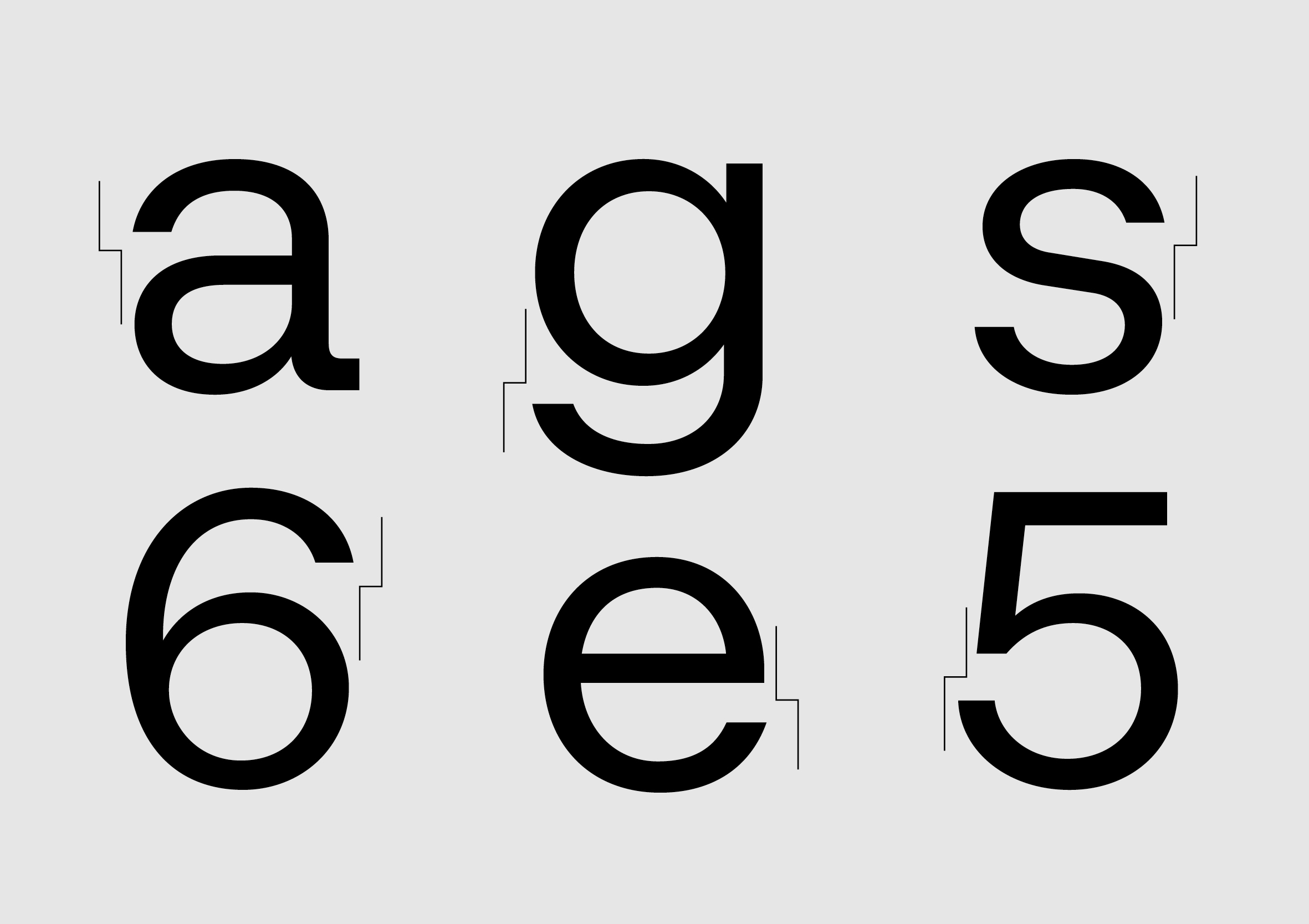
Some characteristic details contribute to its unique identity, such as the subtle "overbite" of the apertures.


Micrograph is a sans serif that navigates the line between classic and modern, ensuring its relevance and appeal will endure into the future.


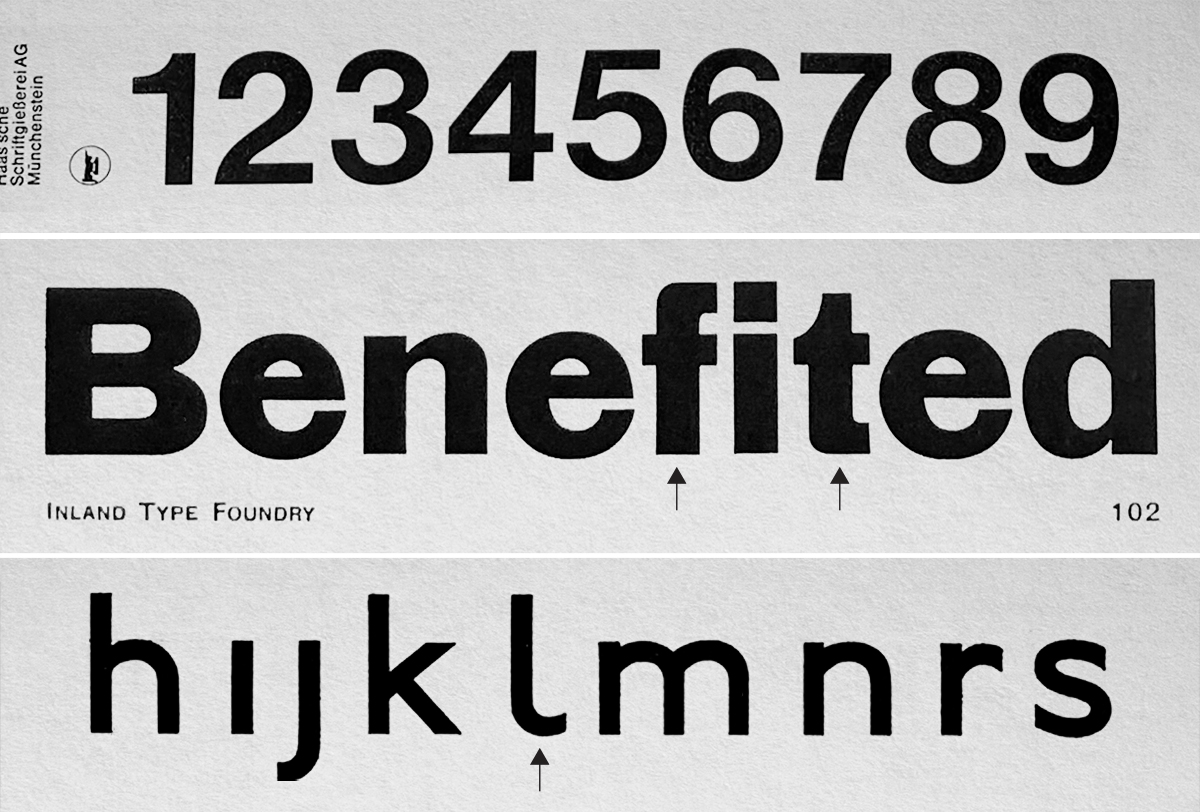
It is a sans serif that draws influences from multiple typographic styles. You could say it's an amalgamation of styles, or we could describe it as a neo-grotesque that incorporates details from many other typographic styles. To mention a few, it is vaguely inspired by Gothic No. 8 in the mechanical curves of the "f," "t," "r," and "y," which are also present in the "l", like in the Edward Johnston’s humanist typeface. In a way, the figures follow a traditional neo-grotesque construction, similar to that of Neue Haas Grotesk, Unica, and other classics. The tail of the "Q" has a spiky ending, more characteristic of the geometric style, as seen in Sol Hess's Twentieth Century typeface. In summary, it doesn't follow any specific model; however, it takes inspiration from many sources to create something original, yet familiar and useful. Upon close examination, as its name suggests, Micrograph reveals characteristic details like the subtle displacement of its apertures, adding a bit of tension and interest to headlines and larger sizes.


From top to bottom, Die Neue Haas Grotesk specimen (1959), Gothic No. 8 Pony specimen (1907) and Johnston typeface (1916). 


The family consists of 18 styles: 8 weights with matching italics and 2 variable fonts (Roman & Italic). A complete range of weights is available, ready to handle projects of any size. As with all typefaces, the extreme weights—very light or very heavy—are intended for display use, while the intermediate weights are more versatile. With a clear, modern voice, this typeface is perfect for conveying contemporary messages. Whether in digital settings like UX/UI or in editorial or branding projects, it adapts effortlessly, adding a distinctive and stylish touch to the content.


Basic character set. 


View Micrograph

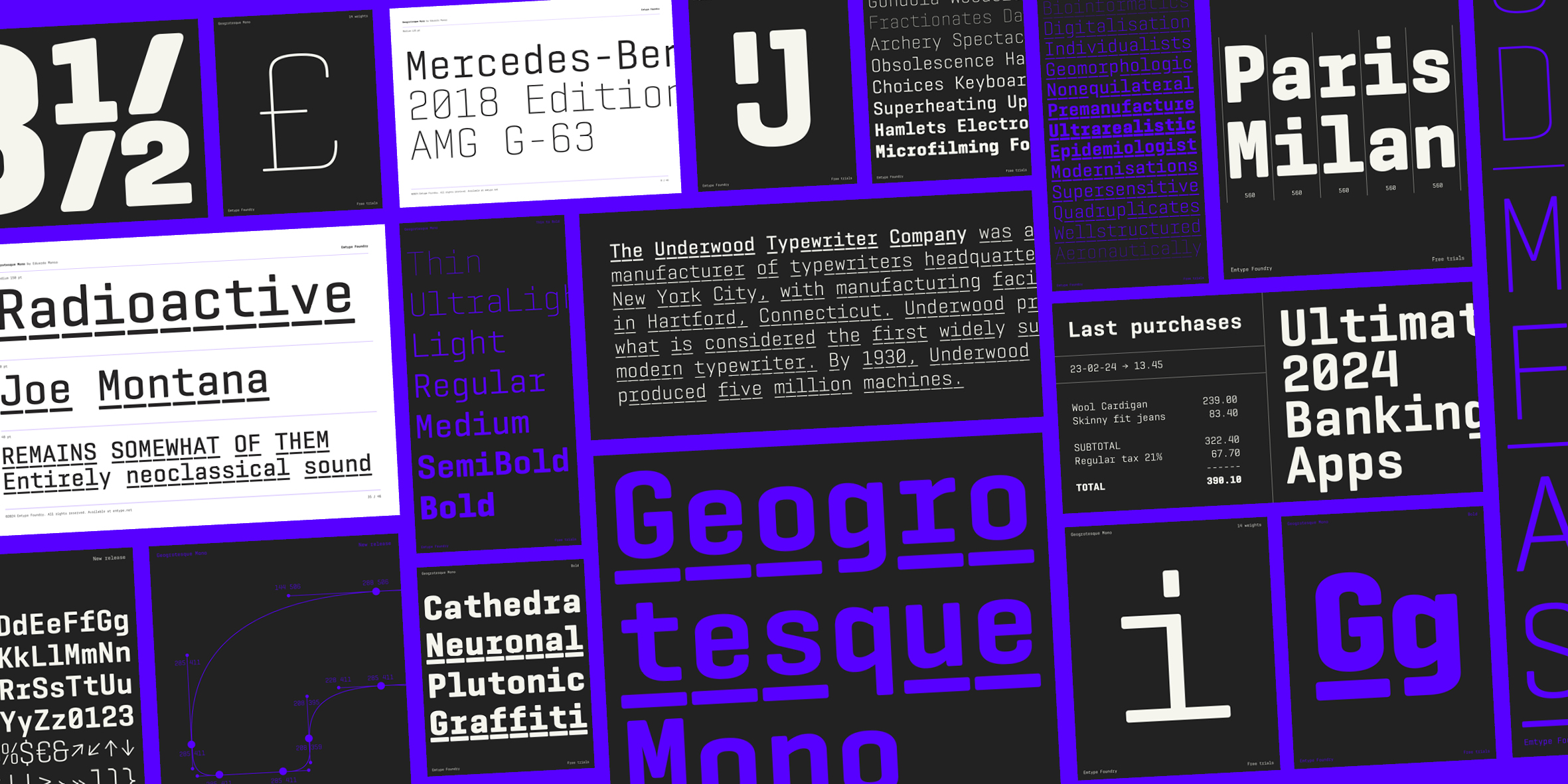
Geogrotesque Mono is the fixed-width counterpart of Geogrotesque. As in the original, the rounded finish provides a warm appearance and make it less hard or technological. It is ideal to use in tables and drafts, but also in packaging or branding where a technical or classic appearance is desired. Geogrotesque Mono is the perfect match for the all time best seller Geogrotesque. It comes in 14 styles: seven weights, plus seven underscored versions...

Geogrotesque Mono is the fixed-width counterpart of Geogrotesque. As in the original, the rounded finish provides a warm appearance and make it less hard or technological. It is ideal to use in tables and drafts, but also in packaging or branding where a technical or classic appearance is desired. Geogrotesque Mono is the perfect match for the all time best seller Geogrotesque. It comes in 14 styles: seven weights, plus seven underscored versions.
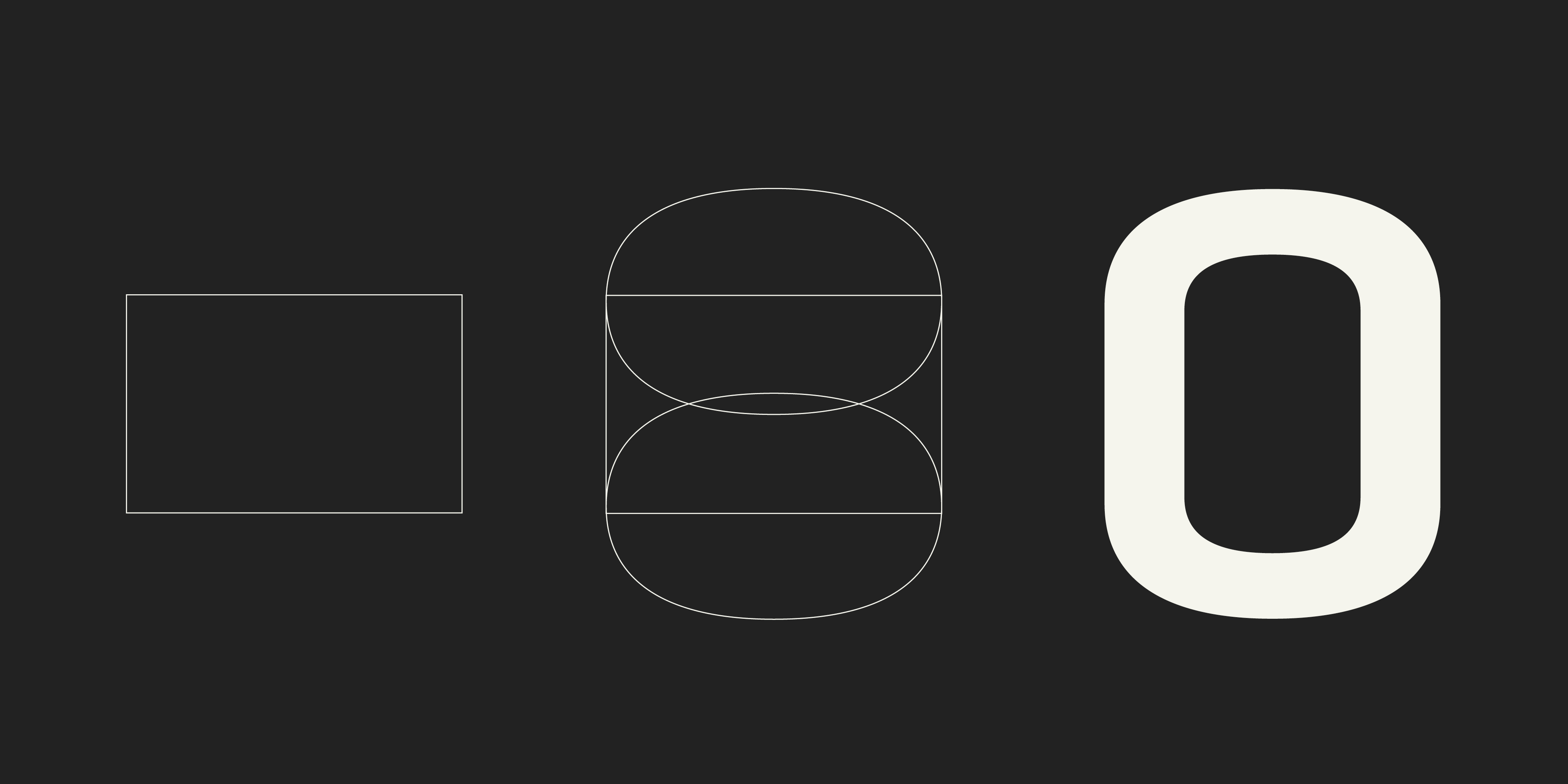
 

Geogrotesque, formal principle. 


Since the launch of Geogrotesque in the late 2008, I have had many failed attempts of doing a monospace version to accompany it. Actually, I have always given up the projects to start something more stimulating. It wasn't until mid 2023 that I took up the idea again. The first monospaced font in my catalogue was Approach Mono, then Inklination Mono; previously, I had done some monospaced fonts for clients. So, when I started this new version of Geogrotesque Mono, in some way, I used all the new knowledge I had accumulated recently and, instead of going back to previous attempts, I started again from scratch.
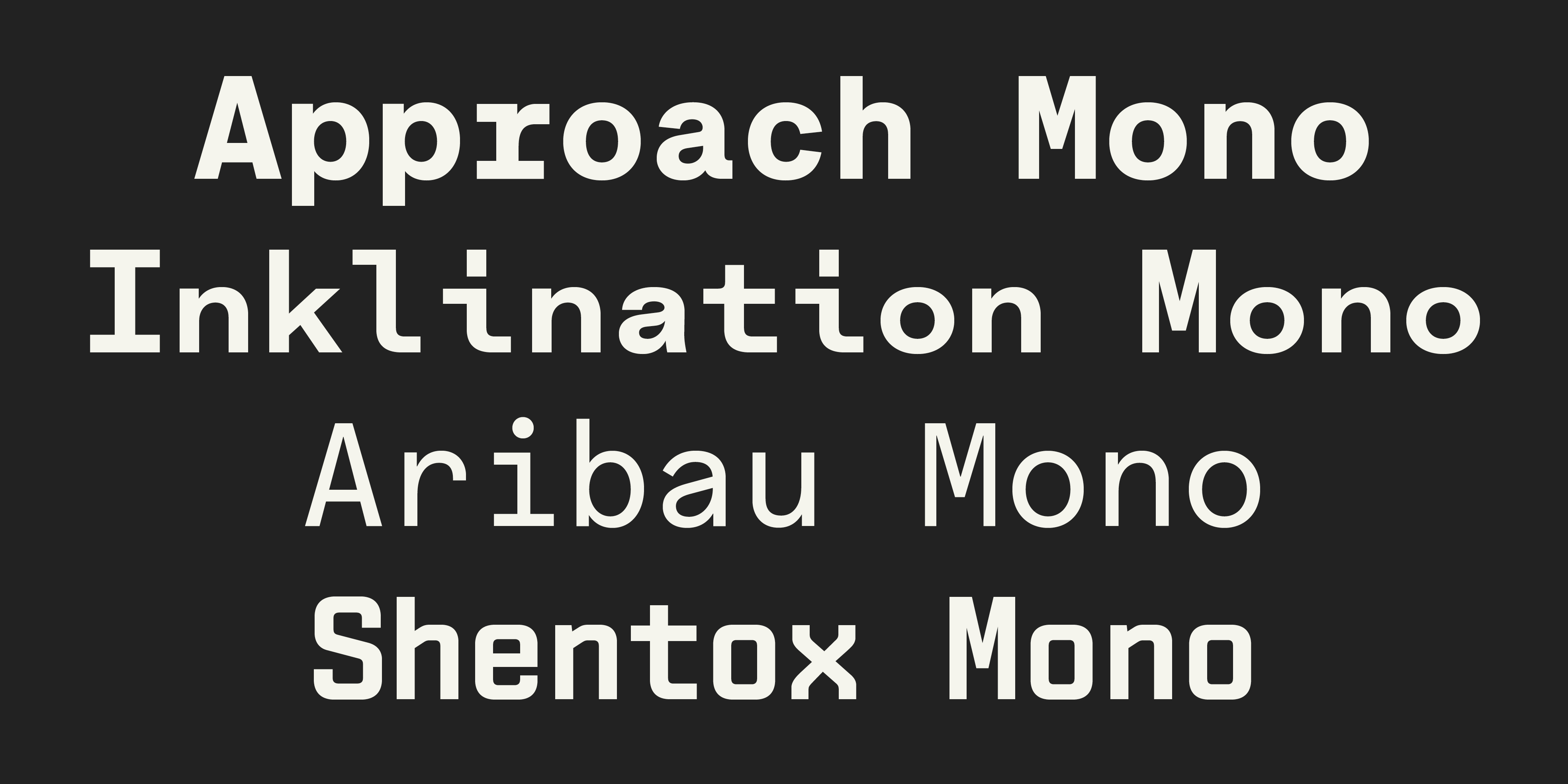
 

Emtype's monospaced fonts, Aribau and Shentox, have not been published yet.


First of all, I've rethought the width and decided not to force myself to respect the traditional “pitch” width (number of glyphs per inch in a specific point size); nowadays, it doesn't make much sense. The value of 600 ems is common, but it is not a fixed rule. It depends on the design and the specific typography needs. The original Geogrotesque is a bit condensed, and in my previous attempts, I always tried with 600 ems of width, which is the width of Courier and a popular choice, but I got a very light and open texture. In this published version, I switched to 560, and it works much better. The positive side effect of this decision is that Geogrotesque Mono saves horizontal space compared with traditional monospaced fonts like the mentioned Courier or San Francisco Mono, for instance. In monospaced fonts, the spacing is determined by the glyph (advance width) minus the width of the outline (bounding box or width); a change in the width has a huge impact on the texture. Finding the perfect black and white balance in a mono is a long but rewarding process; even better, kerning is not needed.
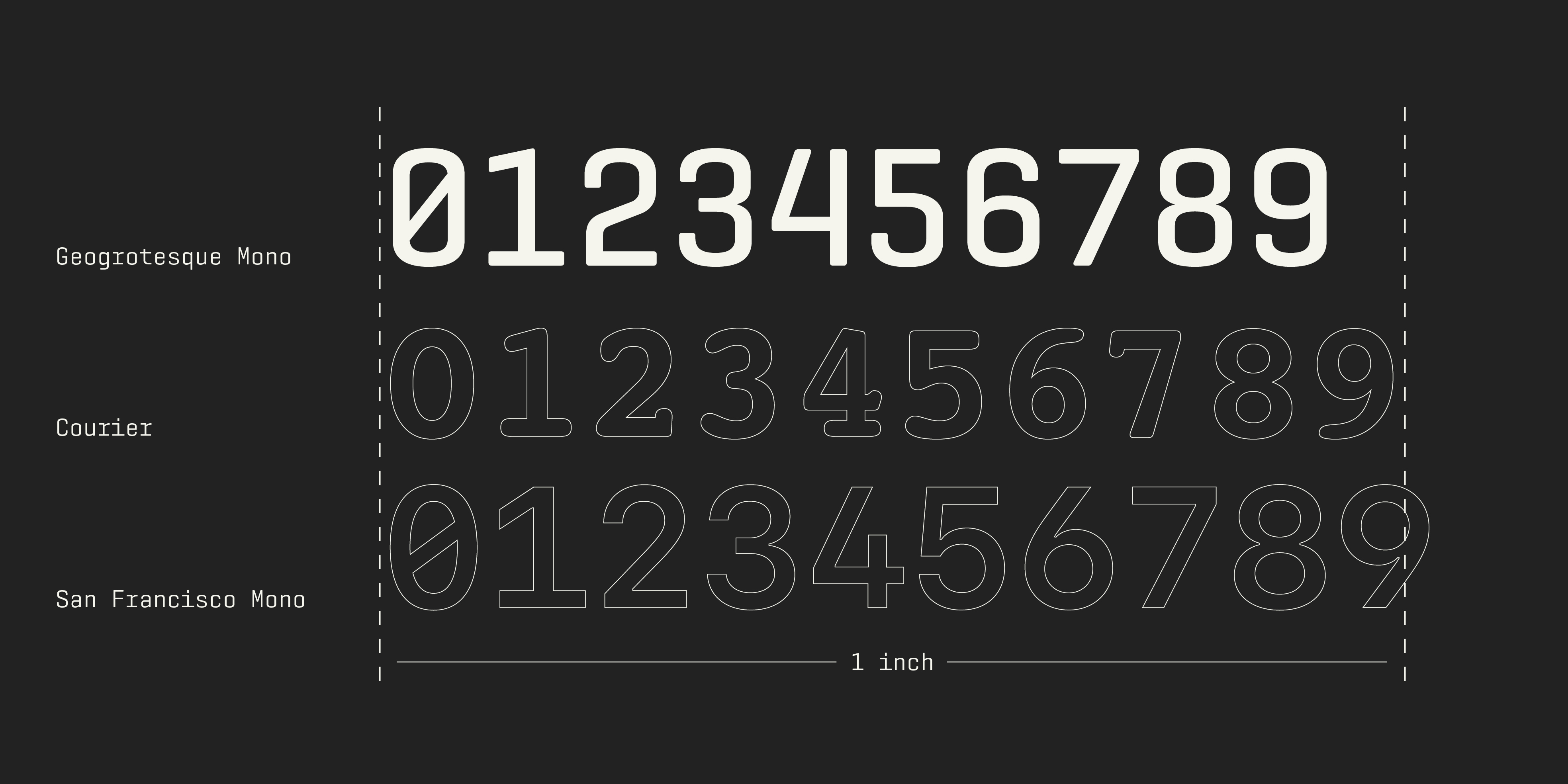
 

Comparison of Geogrotesque Mono with Other Monospaced Fonts. 


Due to the process of finding the ideal spacing, the uppercase letters are more condensed than the lowercase letters. This caused numbers, which are usually narrower than capitals, to have almost the same width as capitals. That is why the zero has a diagonal bar, to distinguish it from the capital O.

fi and fl ligatures are required in most common font encodings. In a context where all characters must be 560 Ems in width, what should be the width of the ligatures? I tried compact ones, but they were a bit noisy and broke the rhythm. Considering that programs like InDesign activate standard ligatures by default, it was not a good idea. The solution was to double the width of the ligatures to 1120, which looks more natural.
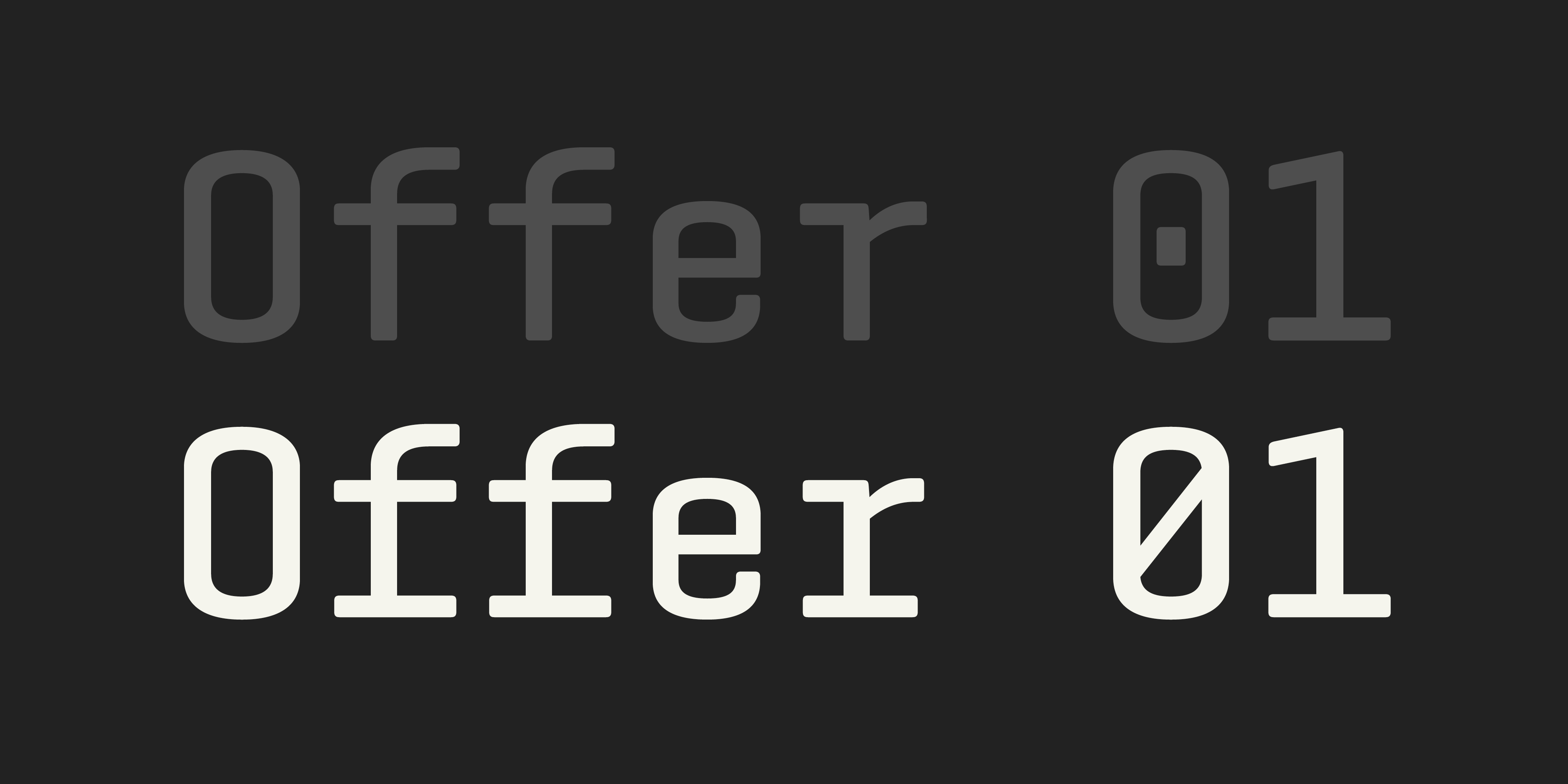
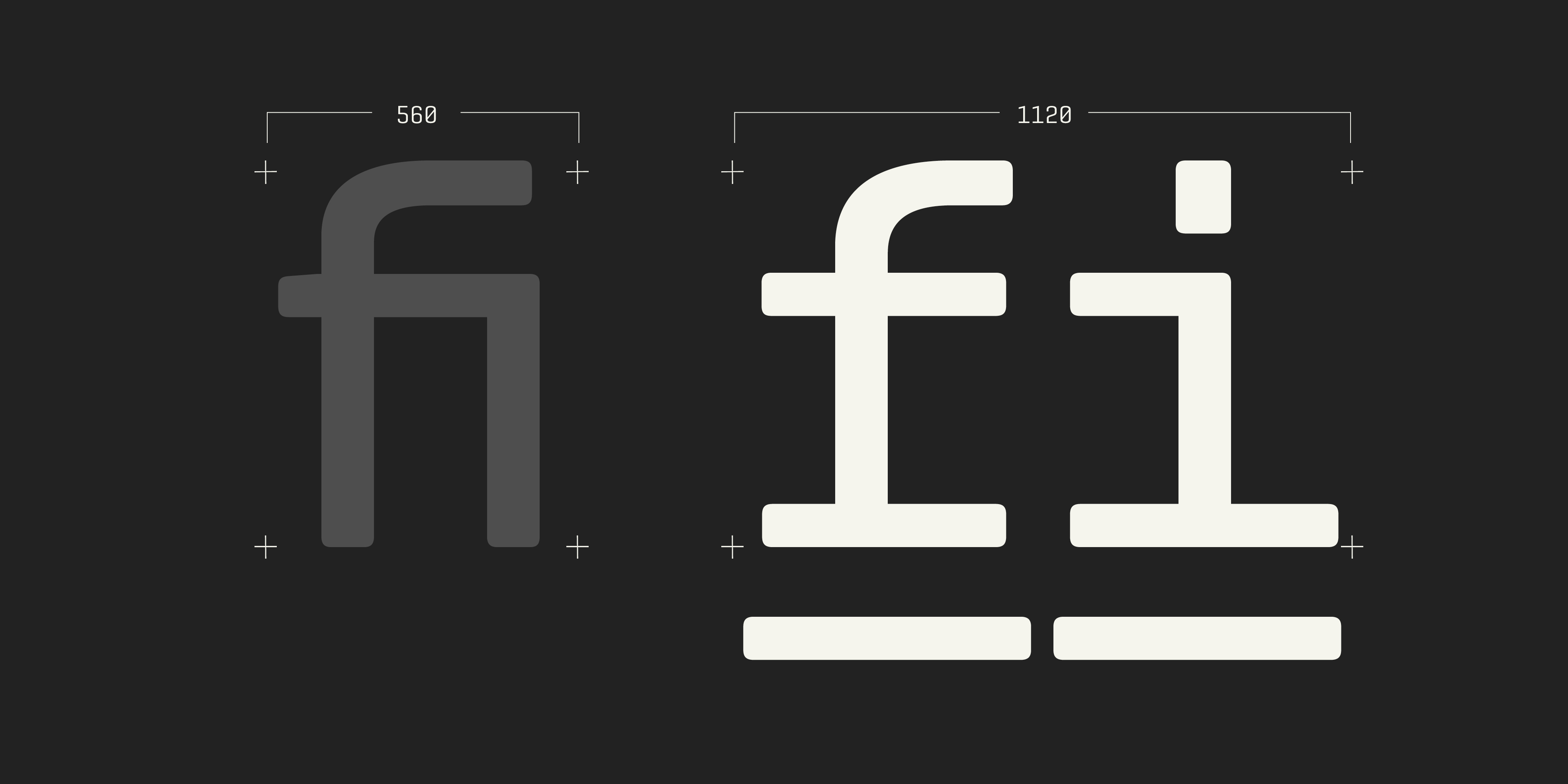
 

Some discarted options in grey and ligatures.


The punctuation is another detail to pay attention to in a mono; commonly, it is heavier and bigger to fill more of the width and avoid the empty feeling in the glyphs. That is why characters like the period, colon, semicolon, etc. are heavier; the same happens with the tittle of 'i' and 'j'. Other characters that were challenging to make fit in the available space were characters that were originally too wide, such as fractions, 'M', 'W', 'm', 'w'. On the other hand, 'i', 'l', or 'I' were too narrow and needed to fill the space, making them wider.
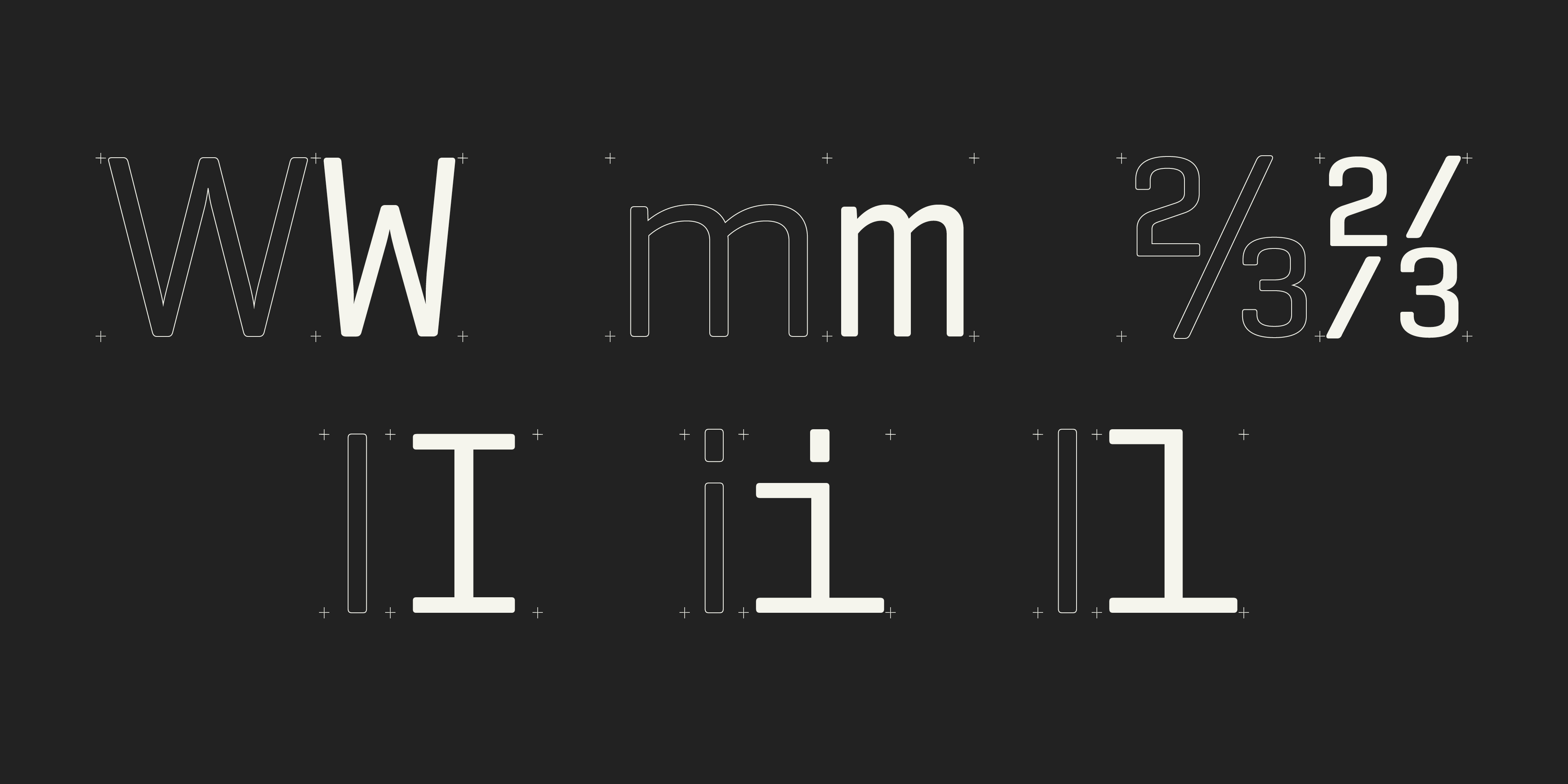
 

Comparison of Geogrotesque and Geogrotesque Mono. 


The are many historical references of monospaced typefaces and one of the recurring variation is the underscored one. This is not surprising, as monospace typefaces emerged due to typewriter machines, and underscoring was a method for highlighting text when there were no options for different weights or italics. Thus, when the first movable types of monospaced typefaces began to appear, they replicated this practice adding an underscored version. Although Geogrotesque Mono already has 7 weights for highlighting and contrasting text, it also includes an underscored version, which broadens the possibilities of use and makes it more versatile.
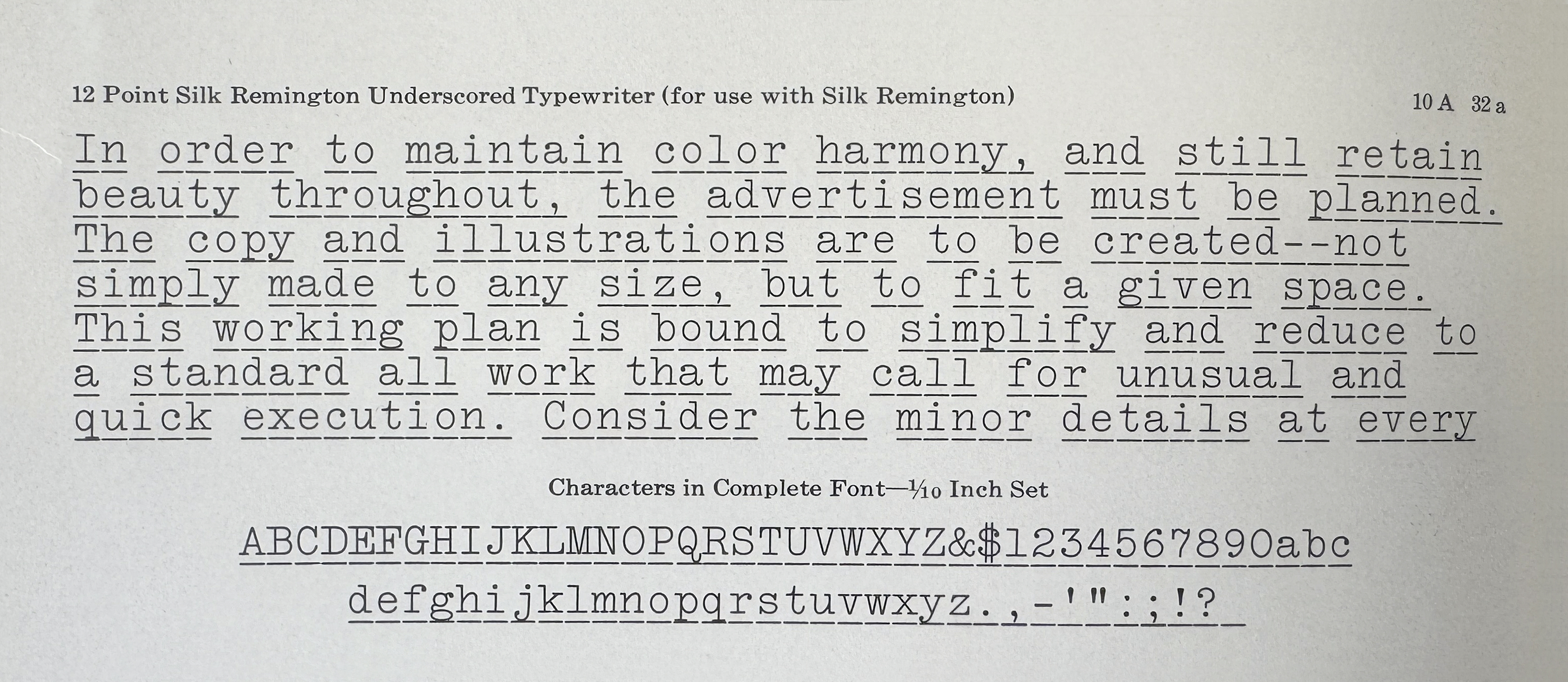
 

Source of inspiration: Slik Remington Underscored Typewriter. American Type Founders Company Specimen Book and Catalogue 1923. New Jersey: ATF, 1923.


Geogrotesque Mono U (U stands for underscored) can be used to highlight text like in the old days or simply to add another dimension to your design. Many characters have been adapted to perfectly match the underscore, for example, curly braces {([])}, descending letters like ‘g’ or ‘j’, etc.
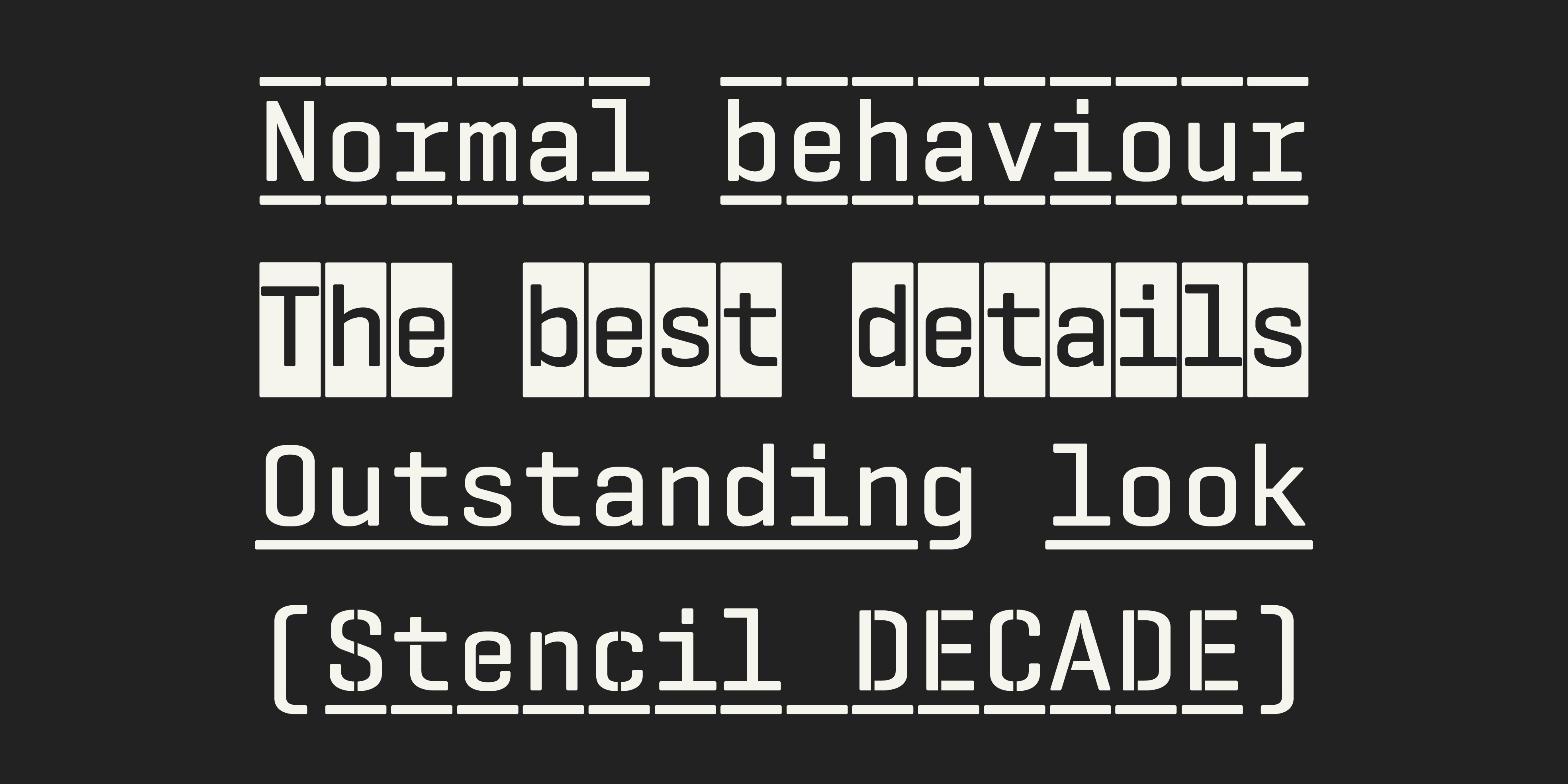
 

Exploration to find the ideal counterpart. The goal was to create a compact and functional family, that implies the discard of superfluous, yet interesting, variations. Designers frequently view typefaces as overly complex, thus simplification is always a wise choice.


Geogrotesque Mono is perfect for use in coding or technical environments. It is well-suited for tables, film subtitles, scripts, and drafts, or professional communication where a technical or methodical appearance is desired. Its clarity and uniformity make it a solid choice for data representation and instructional material. But not only that, monospace typefaces exhibit a distinctive and attractive aesthetic, especially in editorial, packaging, or branding projects seeking to evoke a nostalgic or classic ambiance. The precise, grid-based structure of monospaced characters can infuse a design with personality and allure. The range of weights allows enough flexibility in design, making it appropriate for use in a general design context rather than limiting it to a merely technical one.
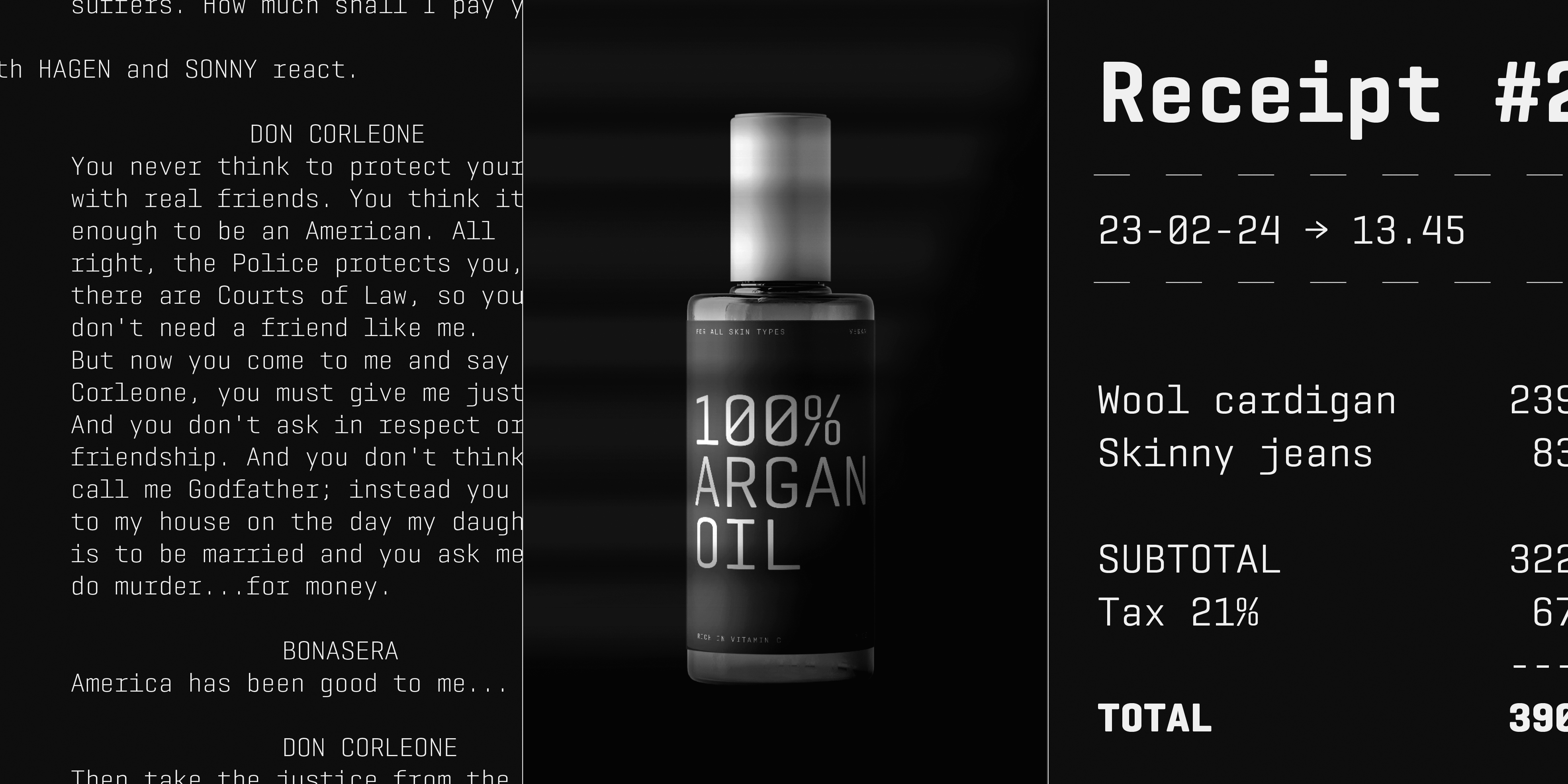
 

Suitable for a large range of situations, from whisky or cosmetic labels to tables or drafts; it could even be used for spatial computing :)


Since the release of the original Geogrotesque, many clients have asked us for a good monospaced font that pairs well with it. Geogrotesque Mono has arrived to answer that need and complement this popular family. It comes in 14 styles: seven weights, plus seven underscored versions. Variable fonts are included with the family or available as separate styles. / em.


View Geogrotesque Mono
 

Cookies preferences

Required cookies
Strictly essential to ensure the correct functioning of the website.
Analytical cookies
Allow us to know how users interact with the website and to improve its performance.